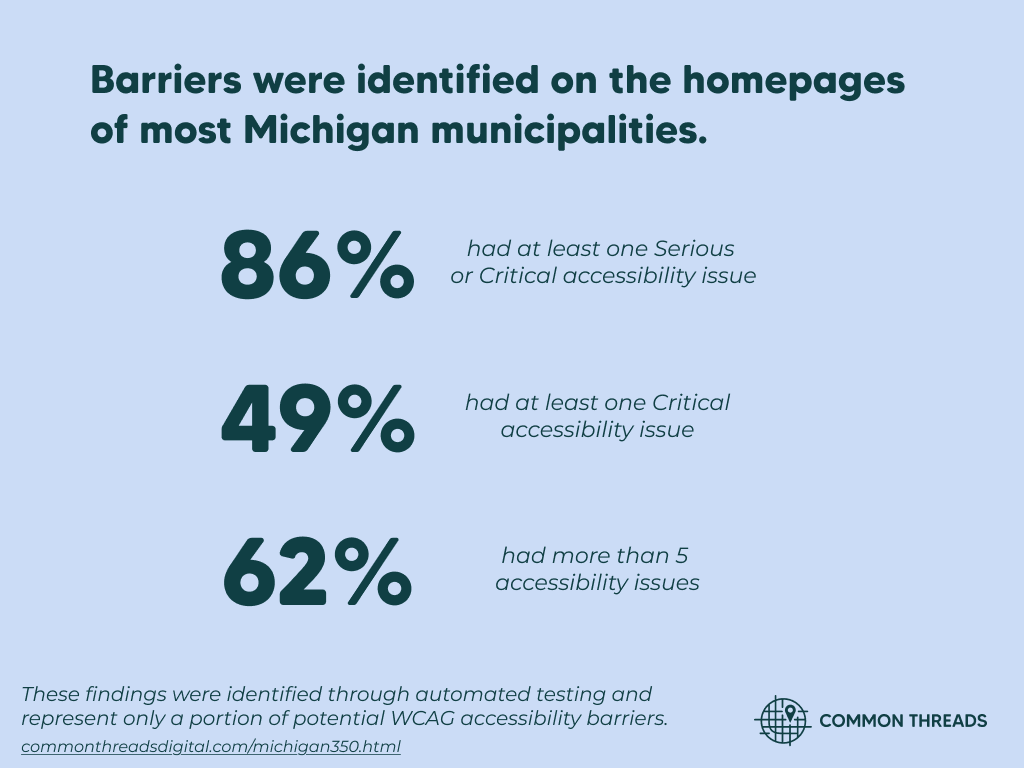
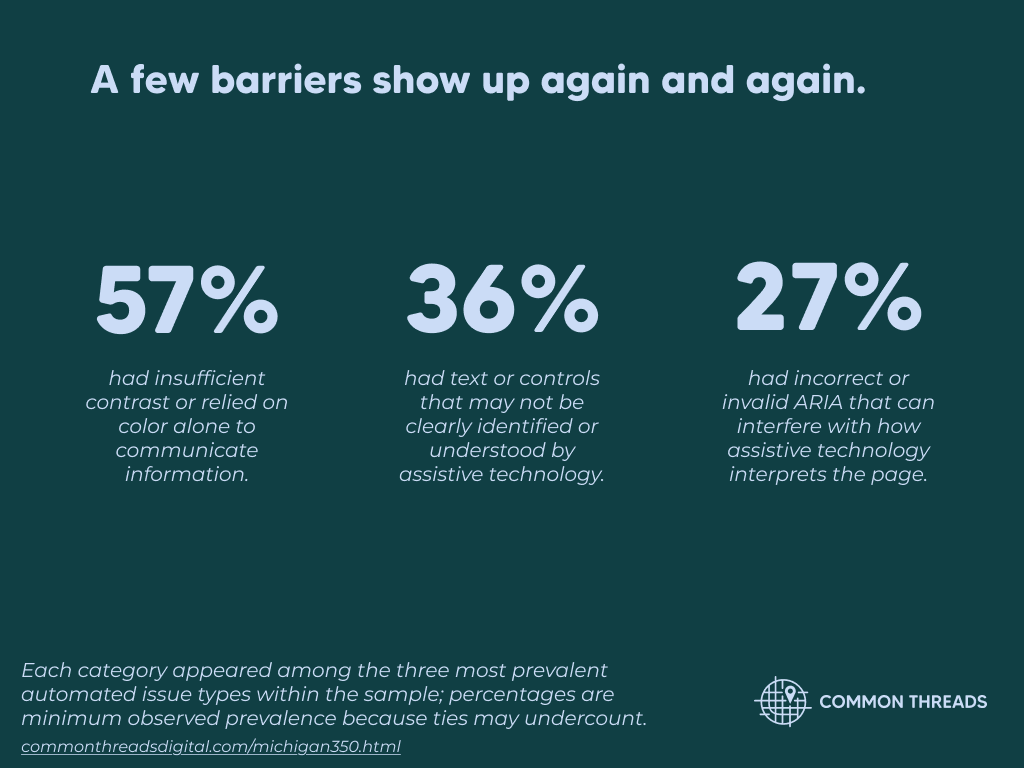
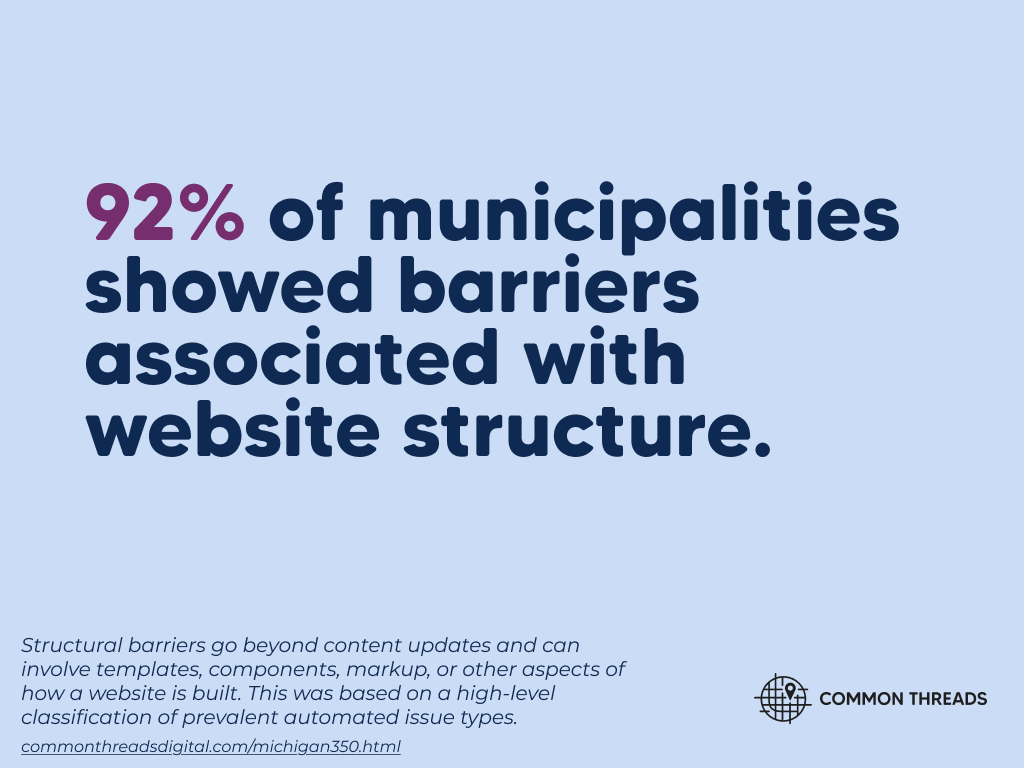
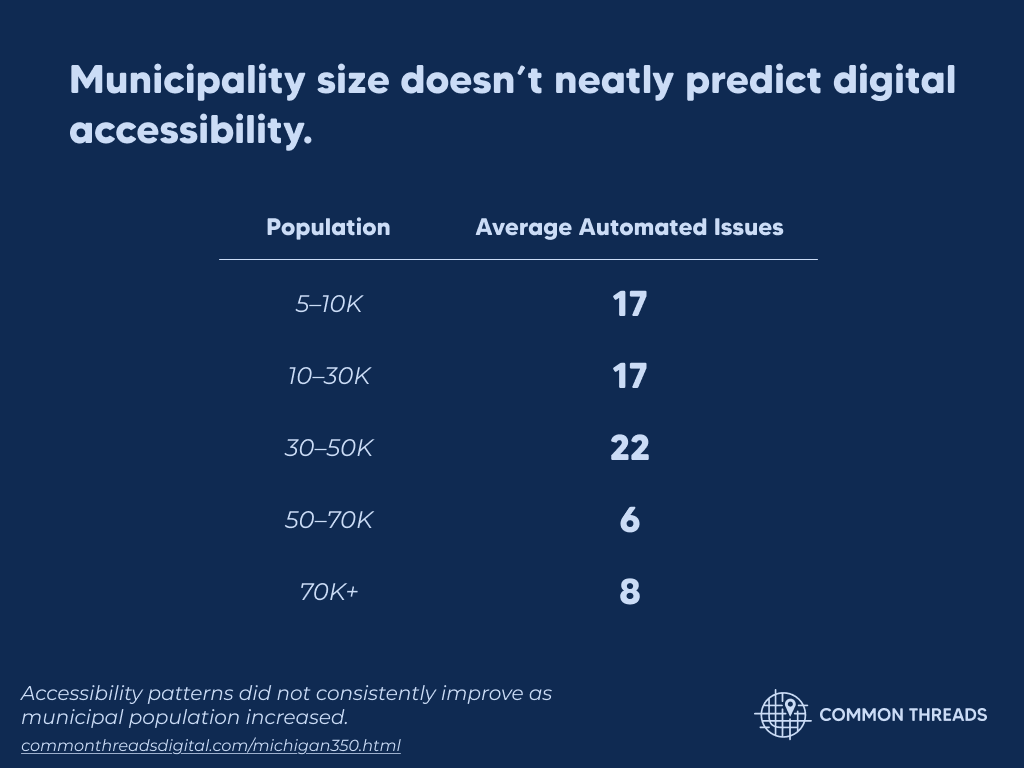
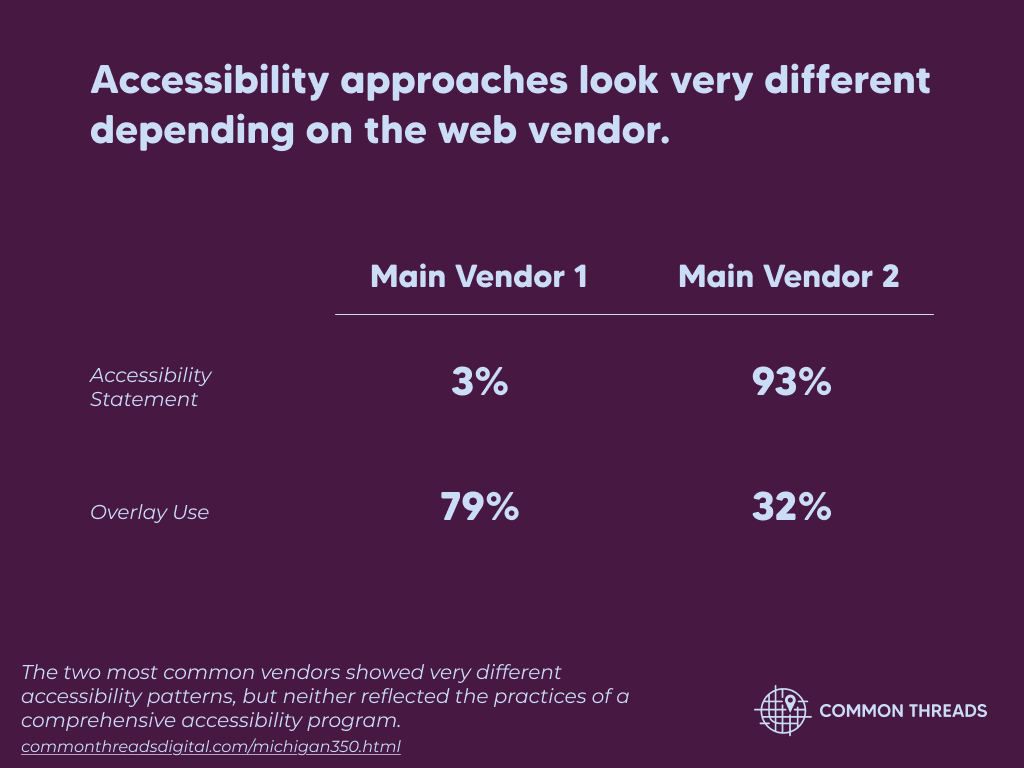
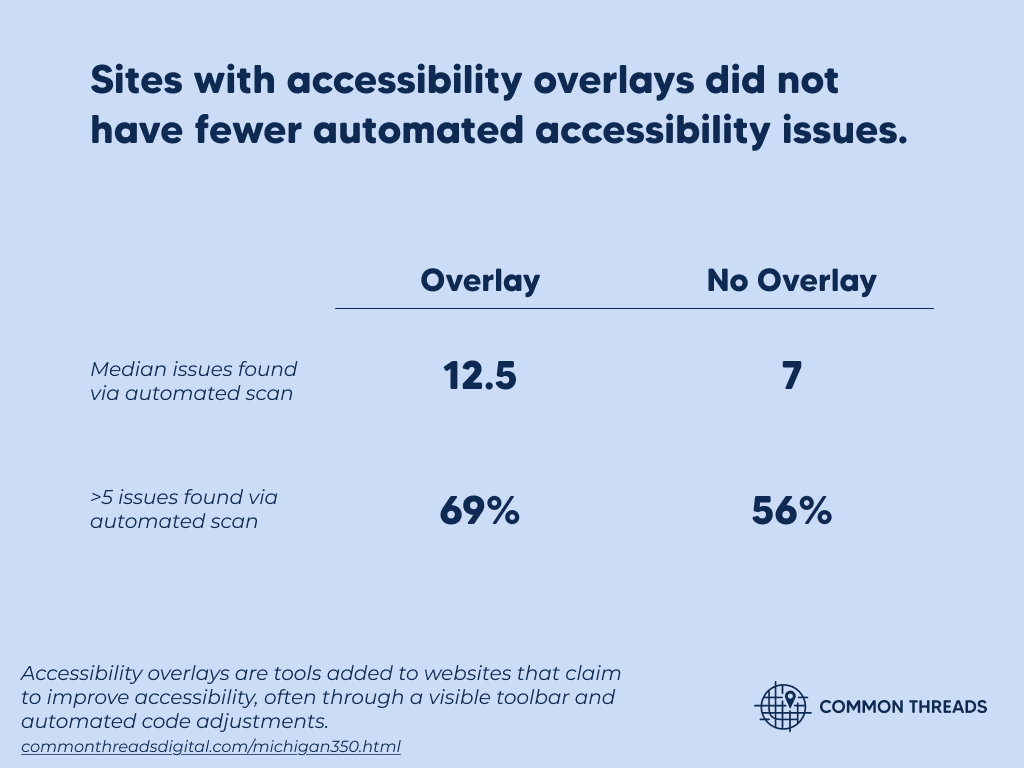
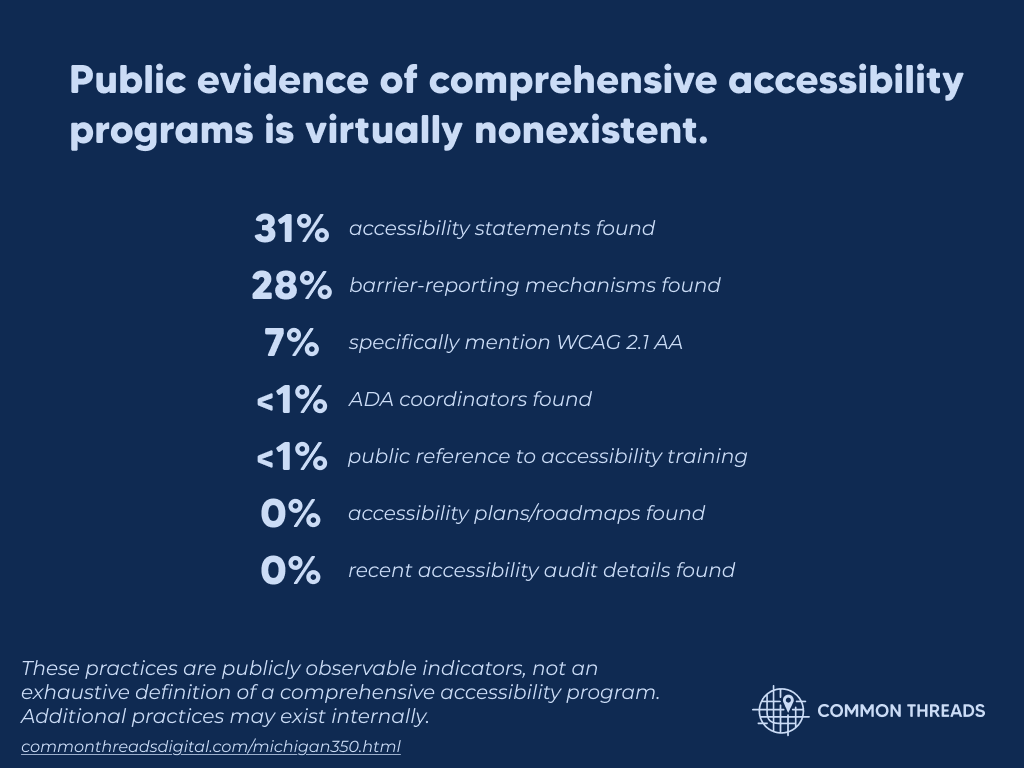
Title card: The Michigan 350, a snapshot of 350 municipalities' digital accessibility. Research by Common Threads. Automated homepage testing found accessibility barriers across most Michigan municipalities studied: 86% had at least one Serious or Critical issue, 49% had at least one Critical issue, and 62% had more than five issues. Automated testing identifies only a portion of potential WCAG accessibility barriers. Several accessibility barriers appeared repeatedly across the sample. Insufficient contrast or reliance on color appeared for at least 57% of municipalities, text or controls that may not be clearly identified or understood by assistive technology for at least 36%, and incorrect or invalid ARIA for at least 27%. Percentages are minimum observed prevalence because ties may undercount. Among municipalities where recurring barriers could be categorized, 92% showed barriers associated with website structure. Structural barriers can involve templates, components, markup, or other aspects of how a website is built. Classification was based on prevalent automated issue types. Municipality size did not neatly predict digital accessibility. Average automated issues were 17 for municipalities with populations of 5 to 10 thousand, 17 for 10 to 30 thousand, 22 for 30 to 50 thousand, 6 for 50 to 70 thousand, and 8 for populations of 70 thousand or more. The two most common web vendors showed very different accessibility patterns. For Main Vendor 1, 3% of municipalities had an accessibility statement and 79% used an accessibility overlay. For Main Vendor 2, 93% had an accessibility statement and 32% used an overlay. Neither pattern reflected the practices of a comprehensive accessibility program. Sites with accessibility overlays did not have fewer automated accessibility issues. Sites with overlays had a median of 12.5 automated findings, compared with 7 for sites without overlays. Sixty-nine percent of sites with overlays had more than five automated findings, compared with 56% of sites without overlays. Public evidence of comprehensive accessibility programs was virtually nonexistent. Across the sample, 31% had accessibility statements, 28% had barrier-reporting mechanisms, 7% specifically mentioned WCAG 2.1 AA, less than 1% identified ADA coordinators, less than 1% publicly referenced accessibility training, and no accessibility plans, roadmaps, or recent accessibility audit details were found. Additional practices may exist internally.

Want the full research?

The complete Michigan 350 report will include methodology, deeper analysis, limitations, and additional context behind these findings.